The impact internal linking has on your content pages' SEO performance cannot be overestimated. The more content pages your website has, the harder it is to manually perform internal linking.
Surfer’s Automated Internal Linking Tool helps you strengthen your website’s structure by quickly inserting contextual internal links.
It’s available in your AI articles, Content Audit drafts, or standalone Content Editor queries under the same button.

Semantic Internal Linking is available as an option only if:
You have connected your Google Search Console (GSC) account to Surfer.
You have created a Content Audit (CA) project for the domain from which you want to insert internal links.

This option allows you to insert internal links without a Content Audit project, but you still need the Google Search Console connection.
In this case, Surfer will offer a simpler linking experience, using basic keyword and URL matching without semantic analysis.
If you’re using Basic Linking, our UI will allow you to configure a Content Audit project for more advanced (semantic) linking.
Open your Content Editor.
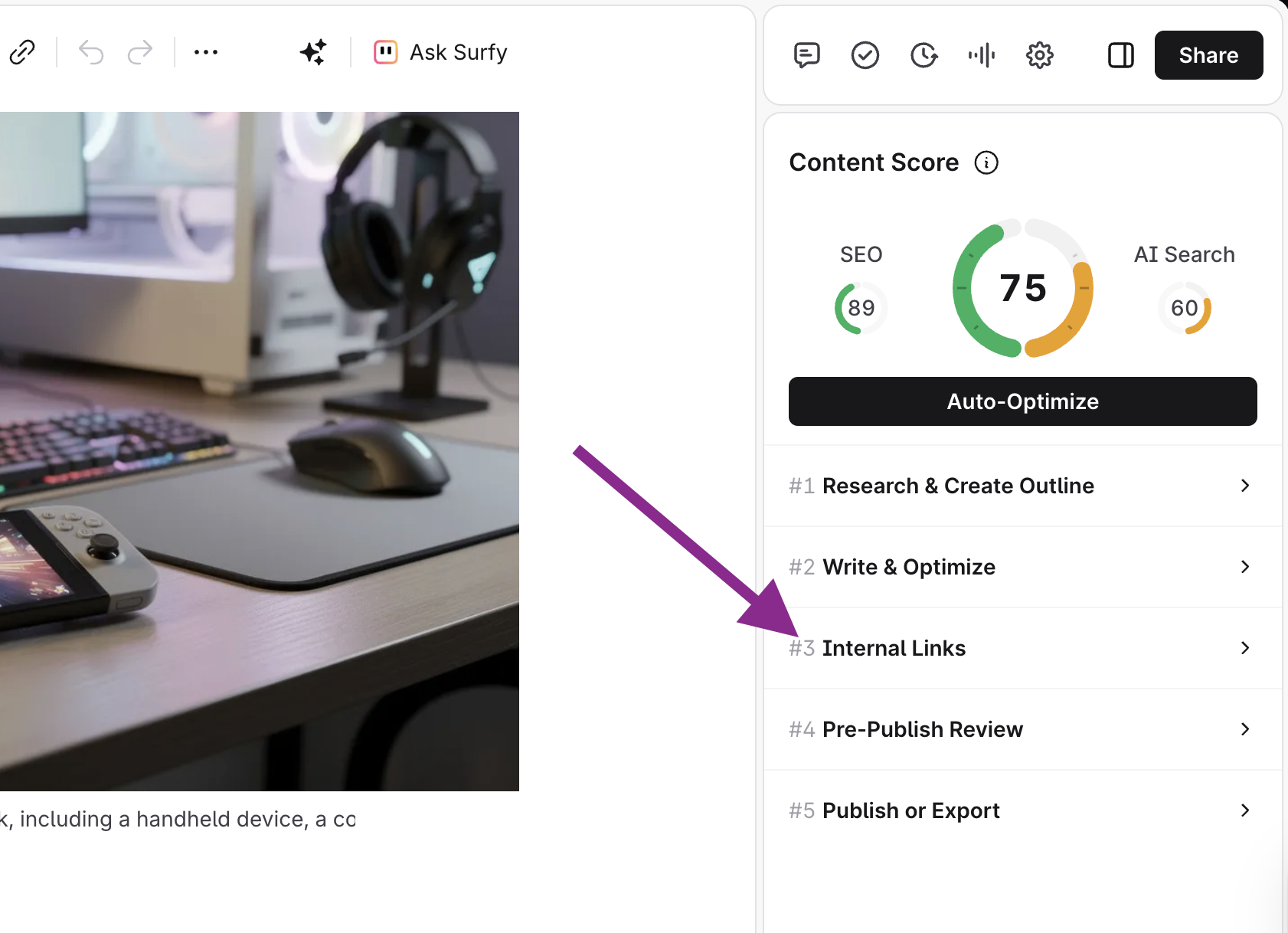
Select the Internal Links button on the guidelines column.
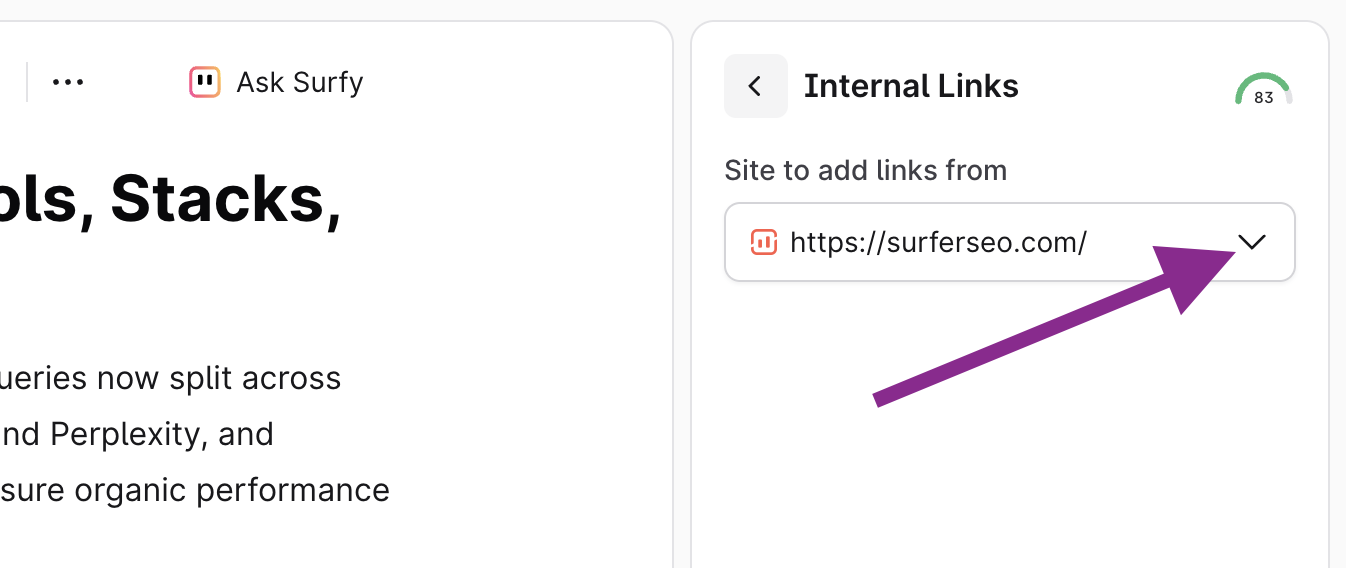
Select your domain from the drop-down menu (If you haven’t connected your Google Search Console account yet, instead, you’ll be asked to connect one).
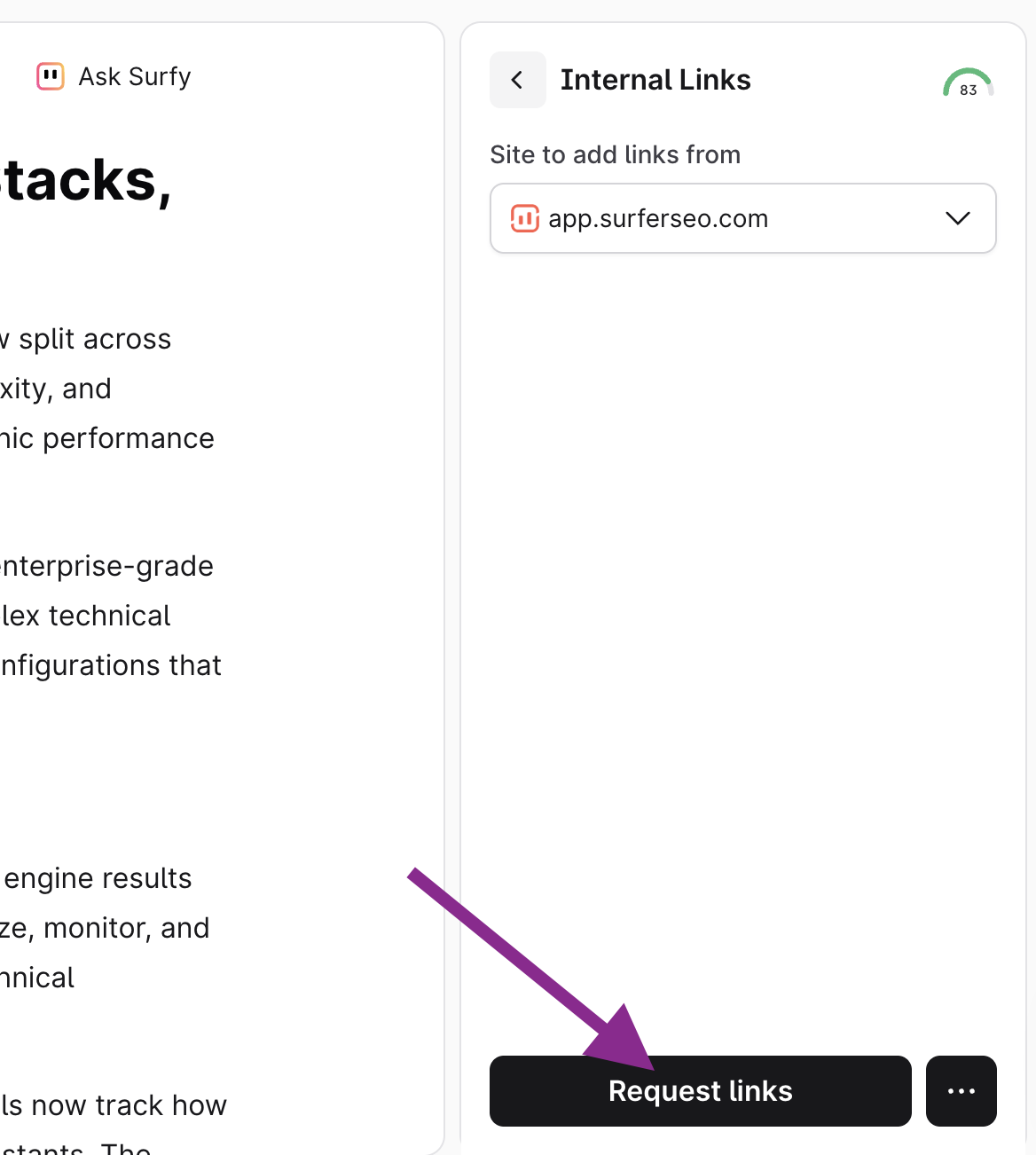
Select Request links to get a list of semantically relevant links from the chosen domain (only available if you have a Content Audit project for the selected domain).
Wait for the suggestions to finish loading.
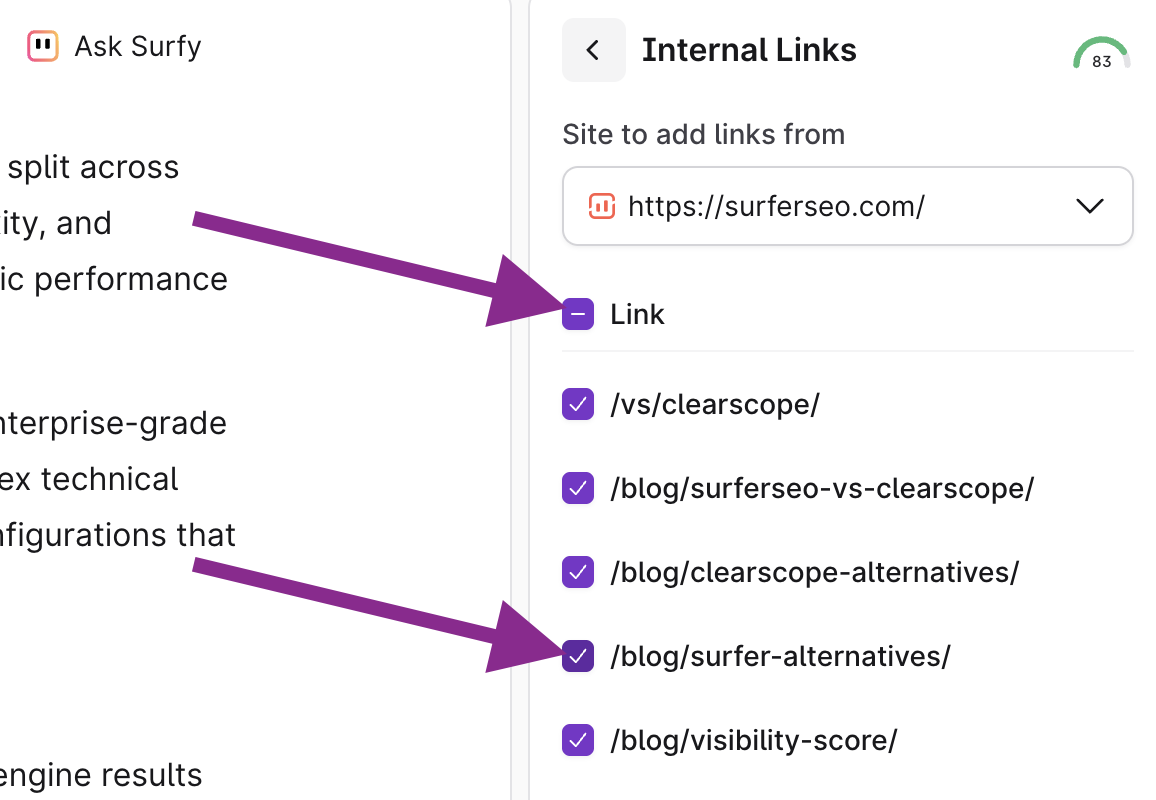
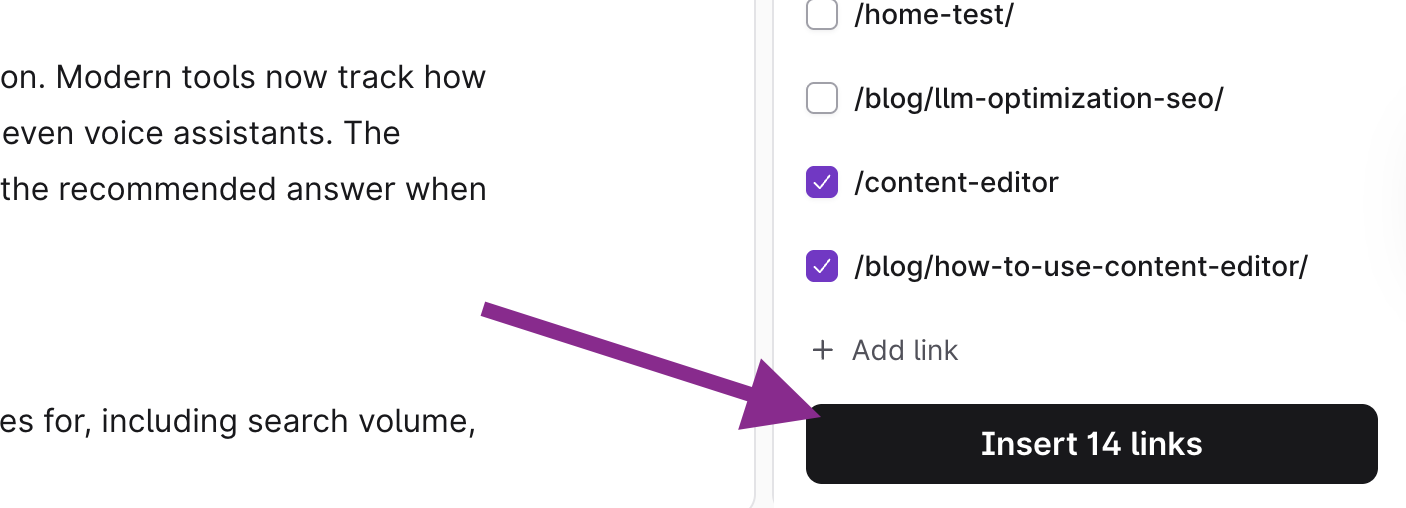
Review the suggested links. Select which ones you’d like to get inserted into your document.
You can also add your own links manually through the + Add link option at the end of the list. Select the Insert x links button to proceed.
Review suggested edits:
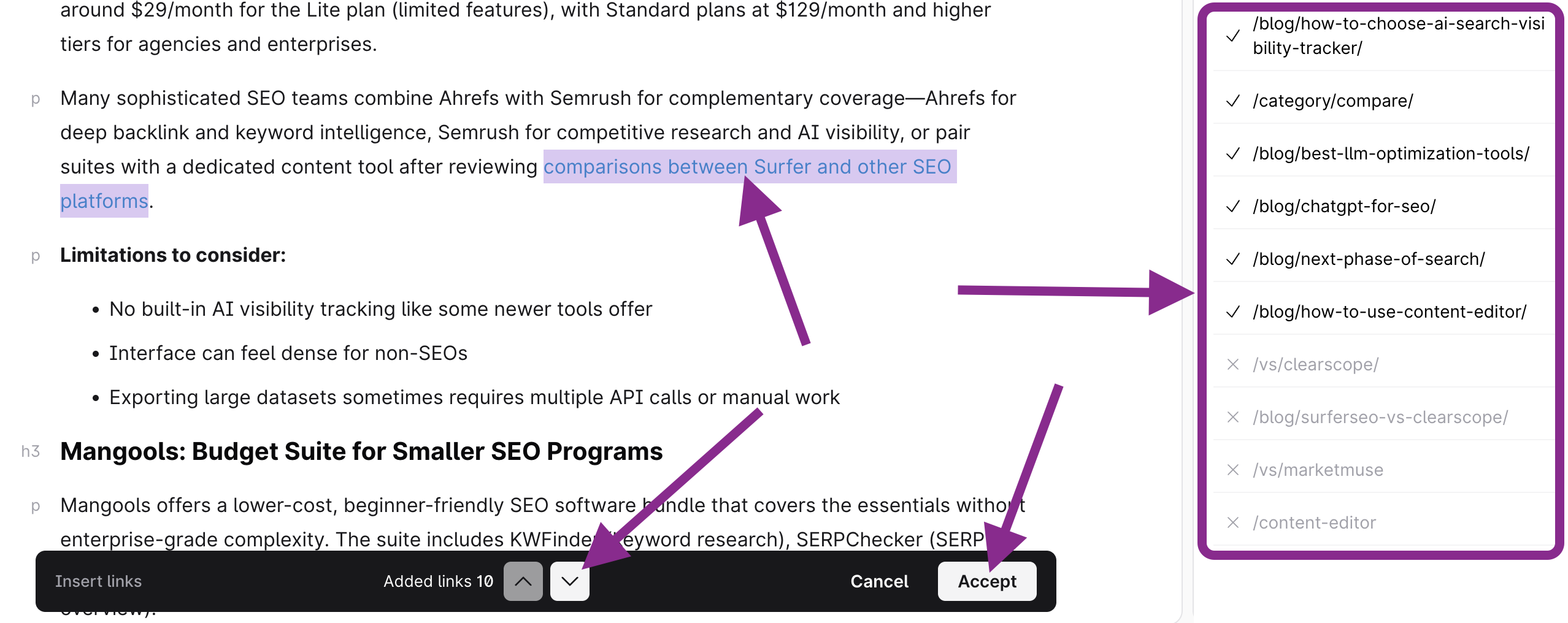
- The list on the right side of the screen will show you which links were successfully added in the relevant place and for which the system couldn’t find a proper place.
- Use navigation arrows at the bottom to quickly move between suggestions. They should appear highlighted. Select a suggestion to either edit it or decline it.
Select Accept if you’re happy with the result or Cancel to abort the link insertion entirely.
Surfer can automatically insert external links into your article when generating content with AI. These links point to authoritative third-party sources relevant to the topics covered in your content — helping establish credibility and provide readers with additional context without you having to research and place each link manually.
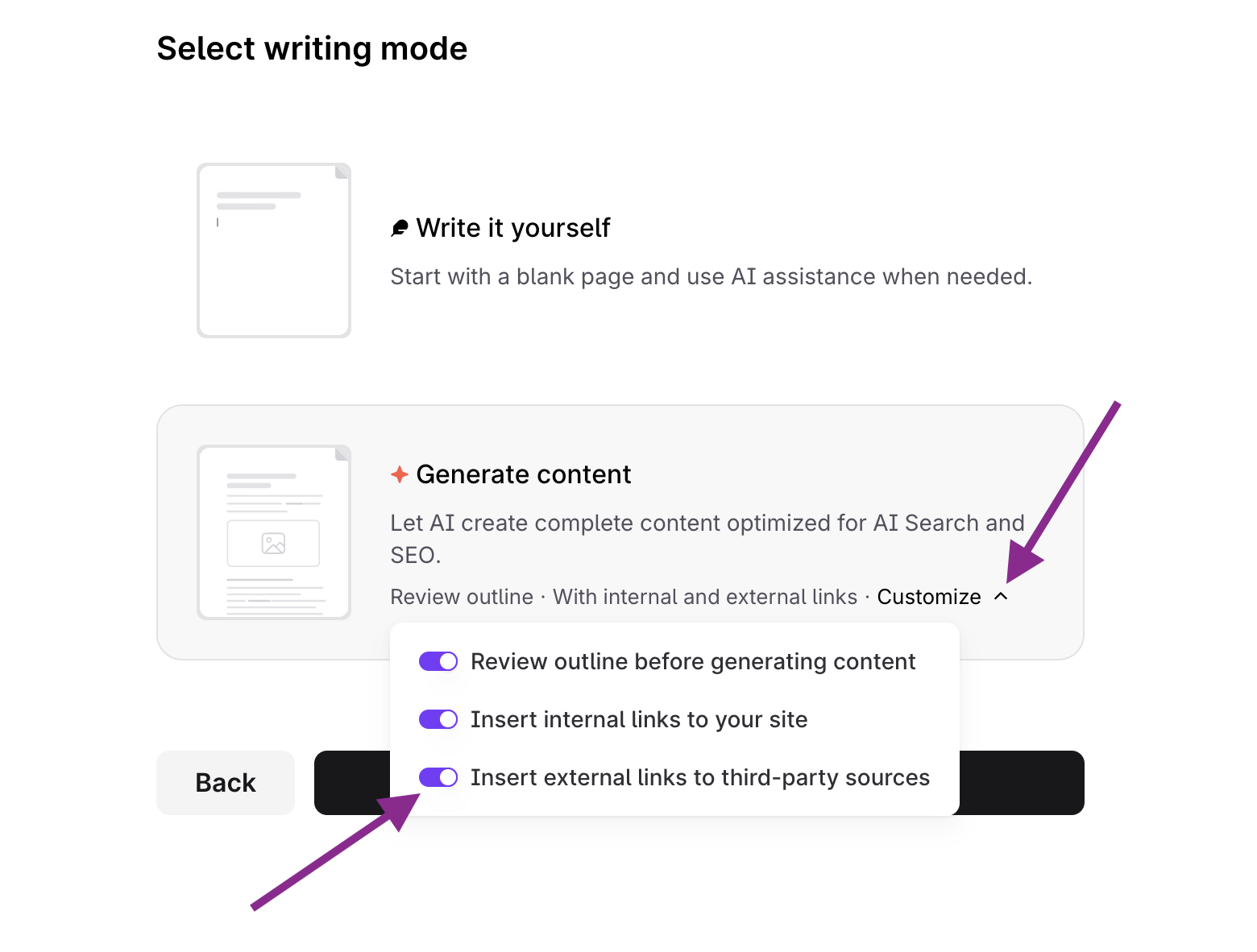
1. Start setting up a new Content Editor. Proceed until the “Select writing mode” step.
2. Select Generate content, expand the Customize drop-down, and enable the Insert external links to third-party sources toggle.
3. Your toggle state is saved between sessions, so you won't need to switch it on each time. If you'd like links to specific sites or sources, add them in the custom instructions step before generating.
4. Proceed with generating your content. It will show up with implemented external links.
Worth noting:
The AI may occasionally produce an incorrect or hallucinated link — always review external links before publishing.
A generation may return no external links at all if the AI doesn't find suitable placements.
The AI will not link to your SERP competitors.
Your Knowledge Base must be populated for this feature to be available. If the toggle isn't visible, either your Knowledge Base isn't connected, or you're editing an existing article outside the wizard.
It uses your Workspace URL rather than your GSC property, so it can insert links from subdomains outside your GSC property scope — even if your workspace was created for a URL prefix.
It follows best practices for linking, such as skipping links in the first 200 words of the article.
This feature is included in the Pro, Peace of Mind, and Enterprise plans. Visit our pricing to learn more.
Once the tool inserts internal links into an article, they behave like any other URL. You can edit a URL's anchor text or delete it.
You'd keep getting internal links if our AI finds relevant content pages on your website on any consecutive run.
However, running it once should suffice in almost all cases, since, as our study shows, the relevance of the suggestions declines with each consecutive run, and having more than 10 internal links in an article doesn't boost its SEO performance exponentially beyond the first 10.
Yes, if you prefer to use the Basic Internal Linking tool, select your domain, click the three dots icon, then select Insert Basic Links.