AI Tracker's Sources Dashboard gives you a behind-the-scenes look at where your AI content is pulling information from. It helps you monitor how often specific domains and URLs are being cited by large language models (LLMs), giving you greater transparency and control over your AI-generated content.
Whether you're tracking trusted domains, verifying citations, or simply curious about which sources appear most often, this dashboard is your go-to.
Date range and AI models filters
At the top of the dashboard, you'll find the date range and AI models filters, which let you narrow down results based on when the AI-generated responses were created and analyze how different models use various sources in a given time period. This is especially useful if you're testing or comparing output across different models and when you want to spot trends or check citations within a specific timeframe.
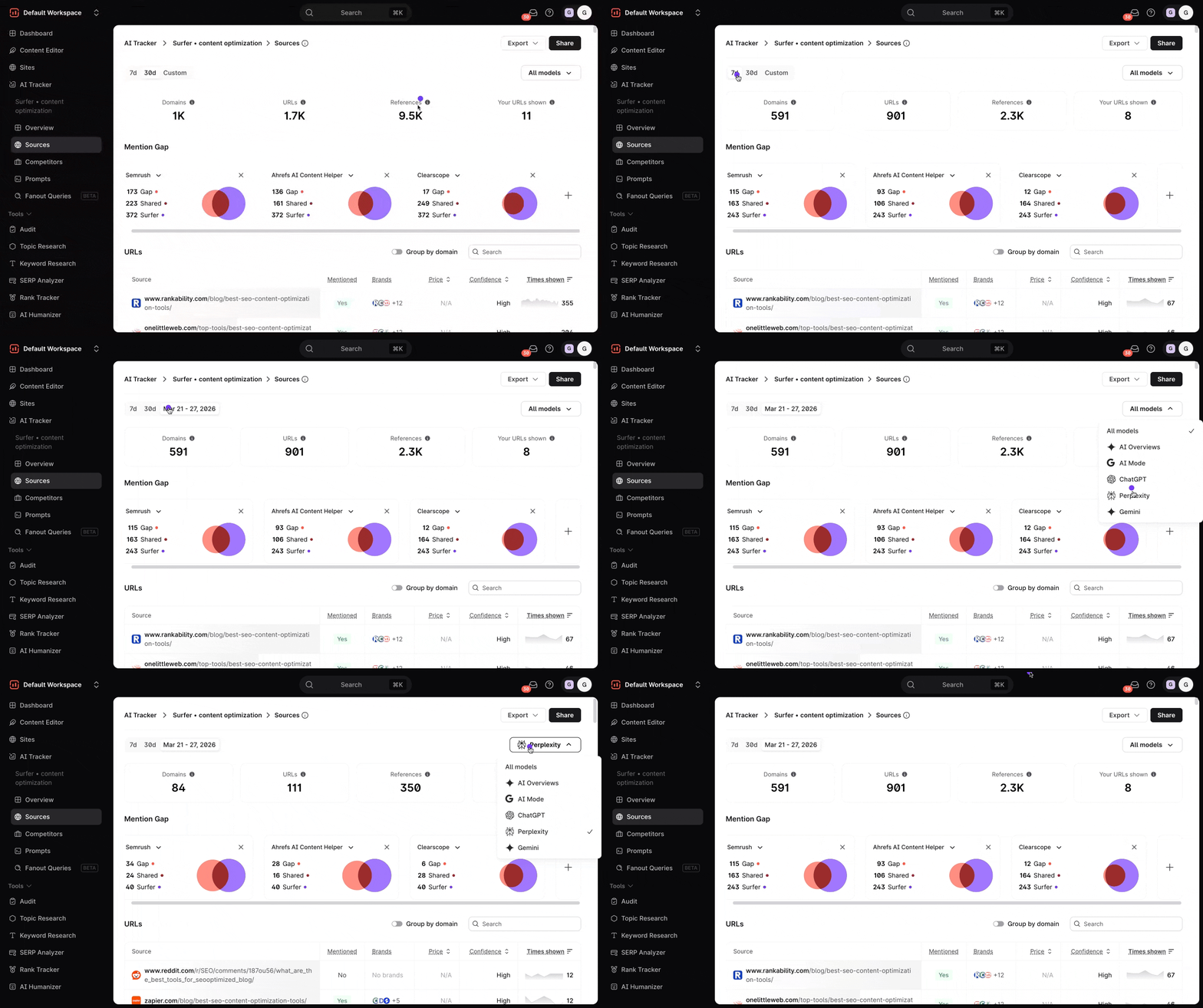

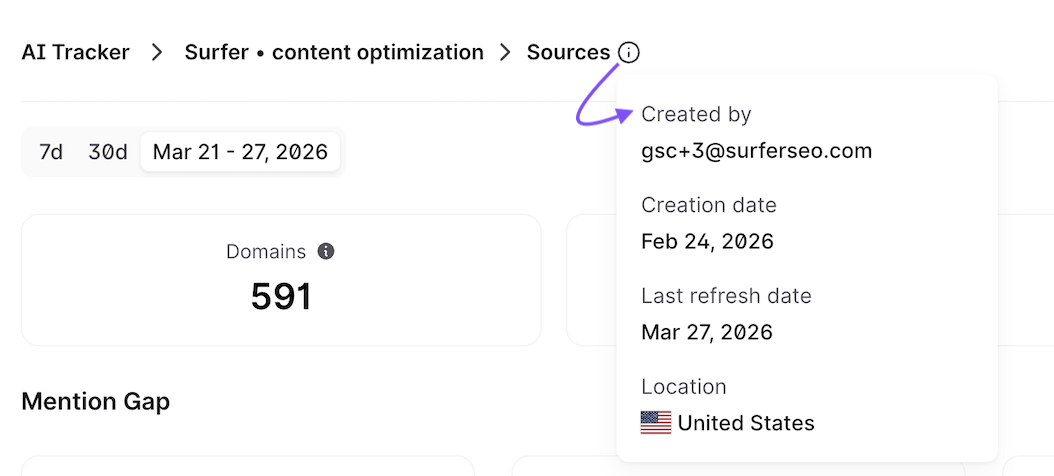
You can click the (i) icon next to your project title to check when it was last refreshed. Your projects refresh daily (weekly on Standard), around the time you created the project.
You'll see five key metrics in the Sources Dashboard.
Domains: These are the unique domains found in LLM-generated responses. Take surferseo.com , for example.
URLs: These are unique individual pages found in the responses, or your actual links. For example, https://surferseo.com/blog/next-phase-of-search/.
References: These are the number of times that a specific URL appears across all responses. In short, how often does the AI cite a link?
Your URLs shown: Number of your unique URLs shown in LLM responses
Mention Gap: shows the difference and overlap in how often your brand is mentioned compared to a competitor across AI models
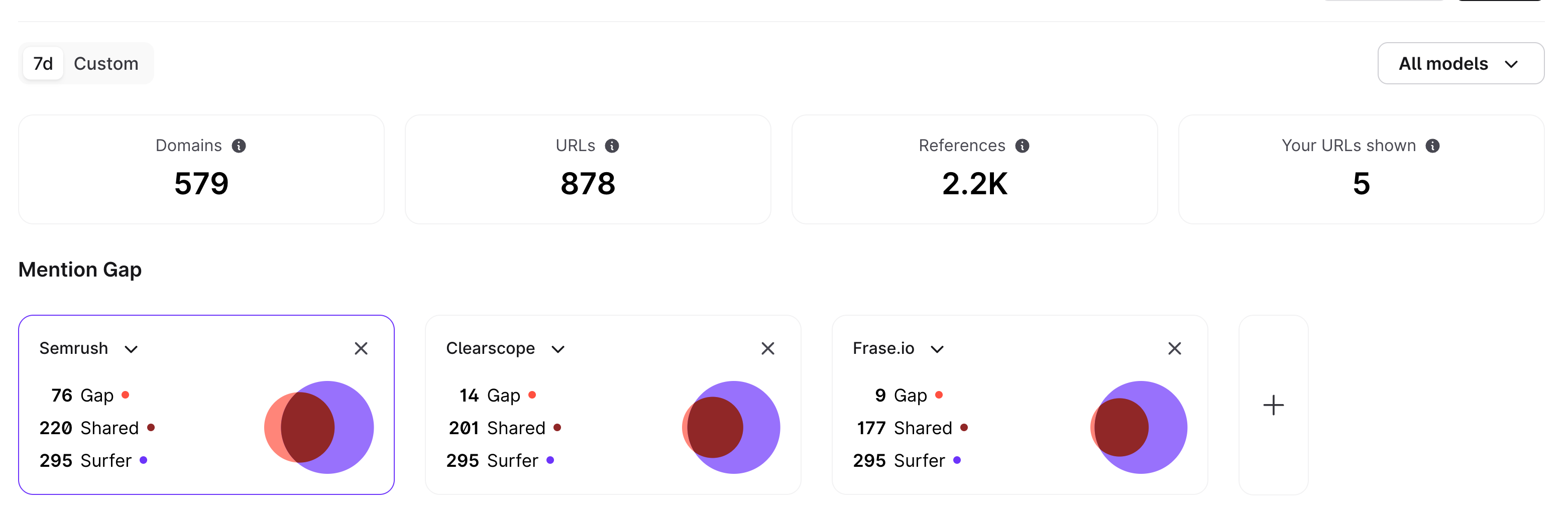
Mention Gap visualizes how often AI models talk about your brand in comparison to your competitors’ brands. It clearly shows which sources mention only them, only you, and which mention both.
This helps you quickly see where your brand is missing from AI responses and which sources to target to compete for AI visibility.

How it works
Mention Gap charts display easy-to-grasp information:
Your competitor's brand name
Gap, which translates to the number of sources that don’t mention you at all
Shared, which is the number of sources that mention you and your competitor
[Your brand name], which displays the number of sources mentioning only you
Select a Mention Gap chart of a competitor that interests you. The Source tab beneath will display a list of related sources.
You will see associated information, such as whether your brand is already mentioned by each source, whether your competitor is mentioned, potential listing costs, and how many times a chosen source has been used by LLMs.
Based on that information, you’ll immediately know whether it is worth getting listed by the chosen source, and you can contact them to arrange it.
By default, Mention Gap displays charts for your most relevant competitors. You can load more by selecting the + button on the right side of the charts. You can also drag and drop charts to change their positions and scroll through them.
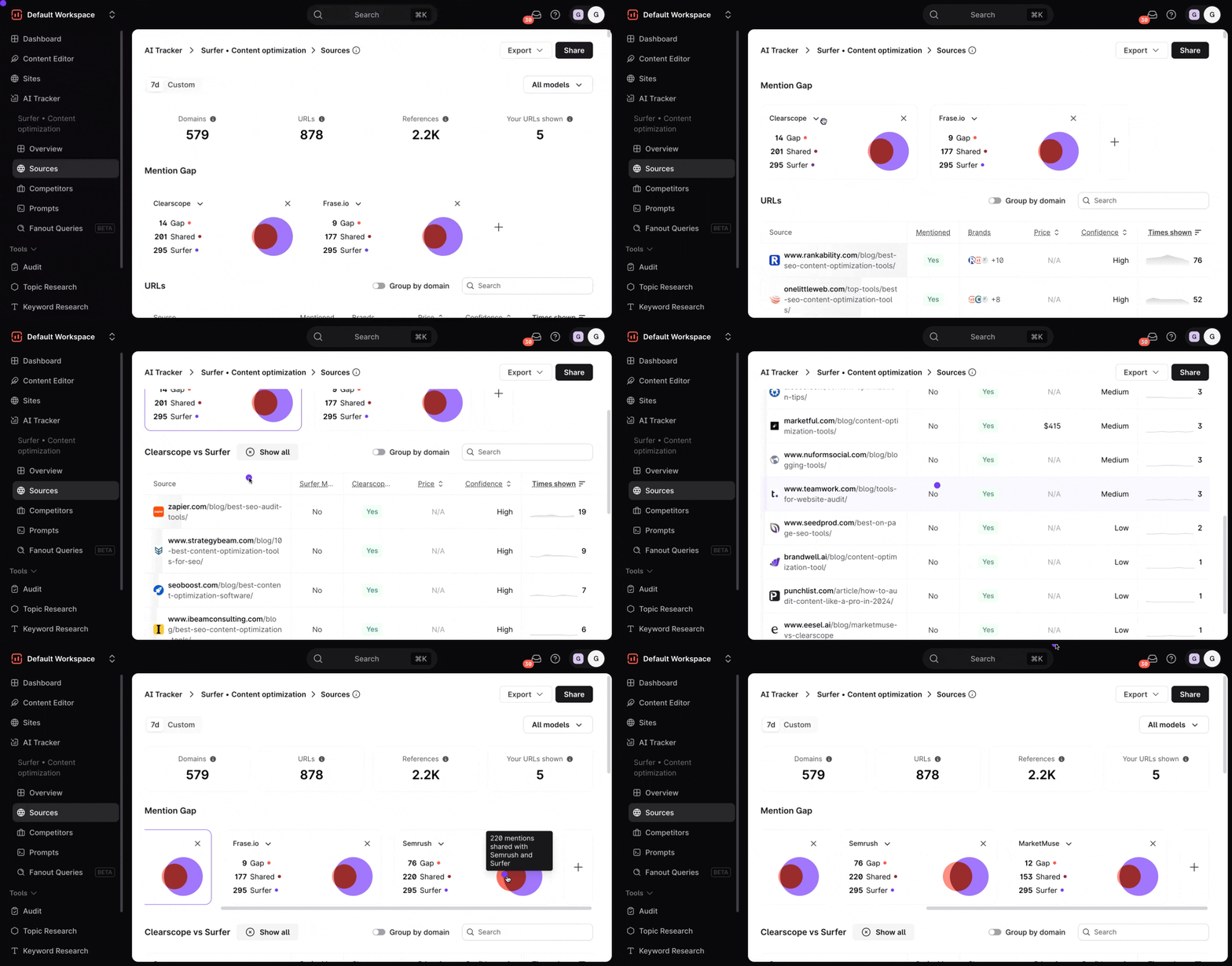

When you scroll down the dashboard, you will find key information per URL source:
Mentioned - whether your brand is mentioned in the source
Brands - list of brands mentioned in the source
Price - the cost of a sponsored article on this source, from our marketplace partners
Confidence - Measures how consistent AI models are when referencing a source across repeated queries. A higher confidence score means the model repeatedly cites that source when asked similar questions, indicating stronger reliability and self-consistency
Time shown - Number of times the URL appears in LLM responses
By default, sources are listed in descending order based on the number of Times shown, being the most frequently mentioned ones first.
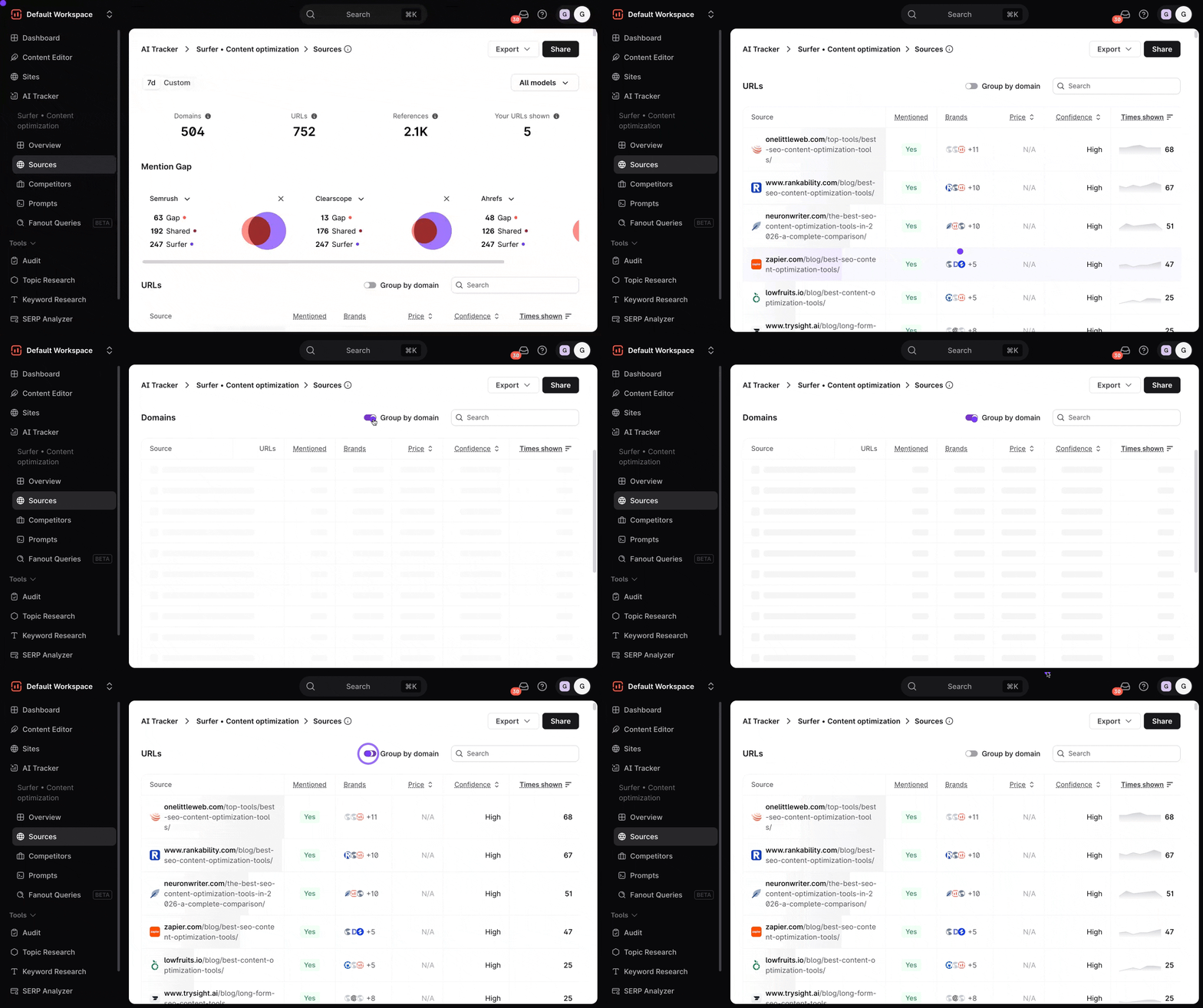
However, if you're looking for a more organized view, you can simply toggle the 'Group by domain' button to group all URLs under their respective root domains. When this view is enabled, you’ll notice:
URLs are nested under their respective domains.
An extra column for URLs appears, so you can see exactly which pages contributed to the domain's reference count.
This helps you quickly assess whether a specific site (like surferseo.com) is a major source, and exactly which of its pages the AI is referencing. You can switch back to the default view any time by toggling the button off. 🔂
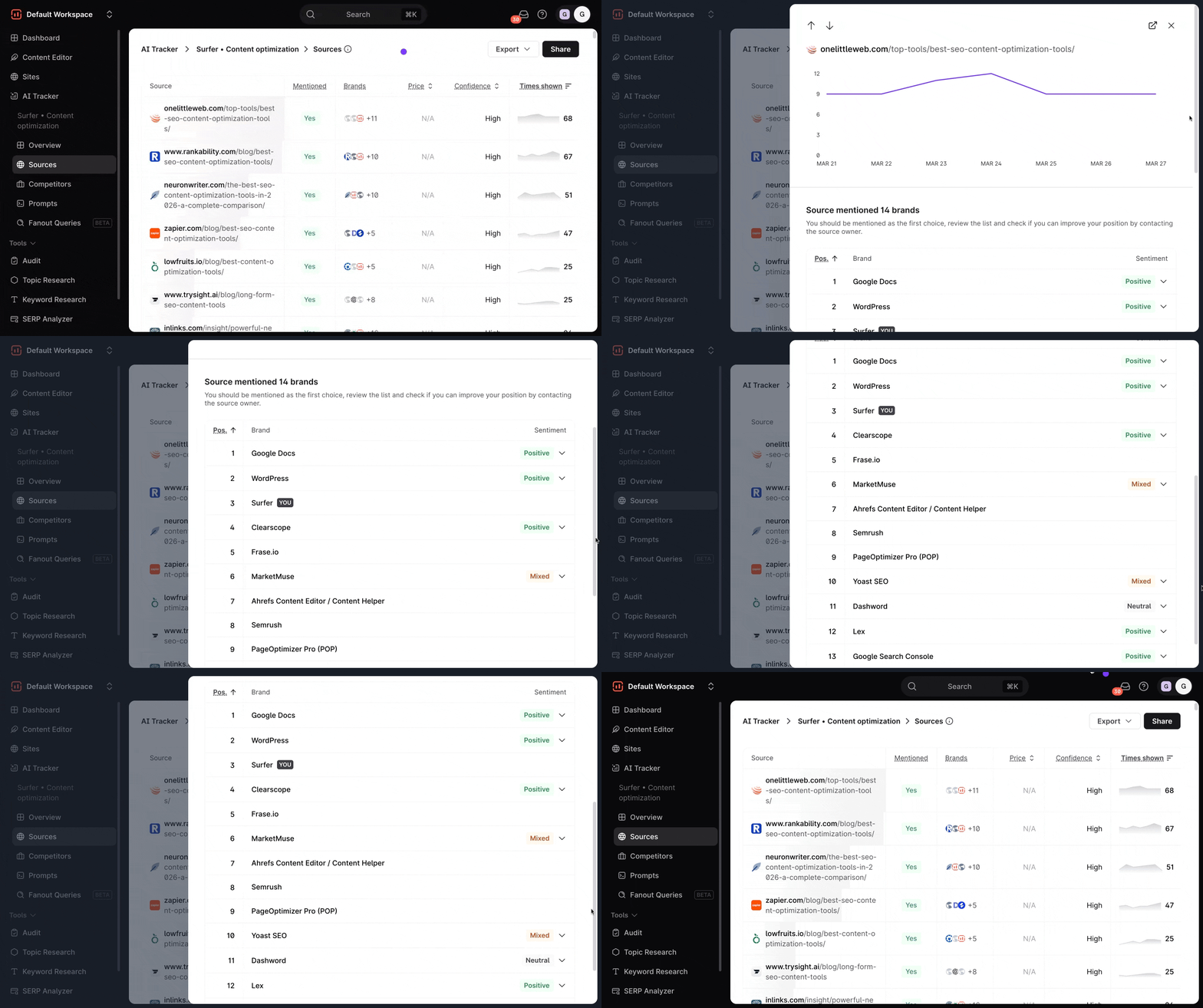
If you’d like to dive deeper into how a chosen source is performing, select it to open a detailed view. It will show you what the display rates in AI responses look like over time, and, more importantly, which brands they reference and in what sentiment.
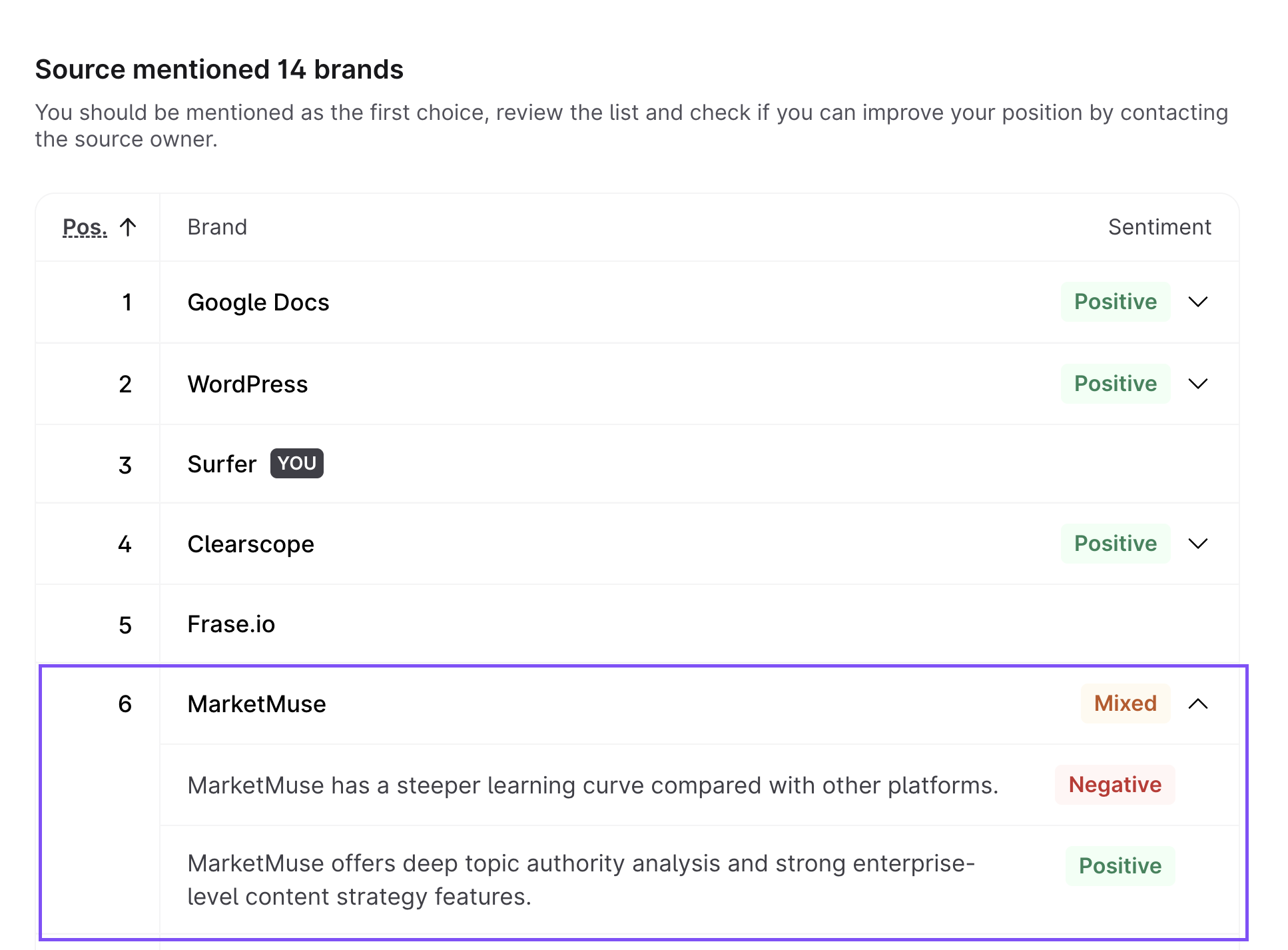
The sentiment can be Positive, Negative, Neutral, or Mixed (if we find more than one opinion about a brand while crawling the source).
In addition to showing sentiment, we also show the opinion on which it is based, so you can see which statements contribute to the brand’s sentiment.
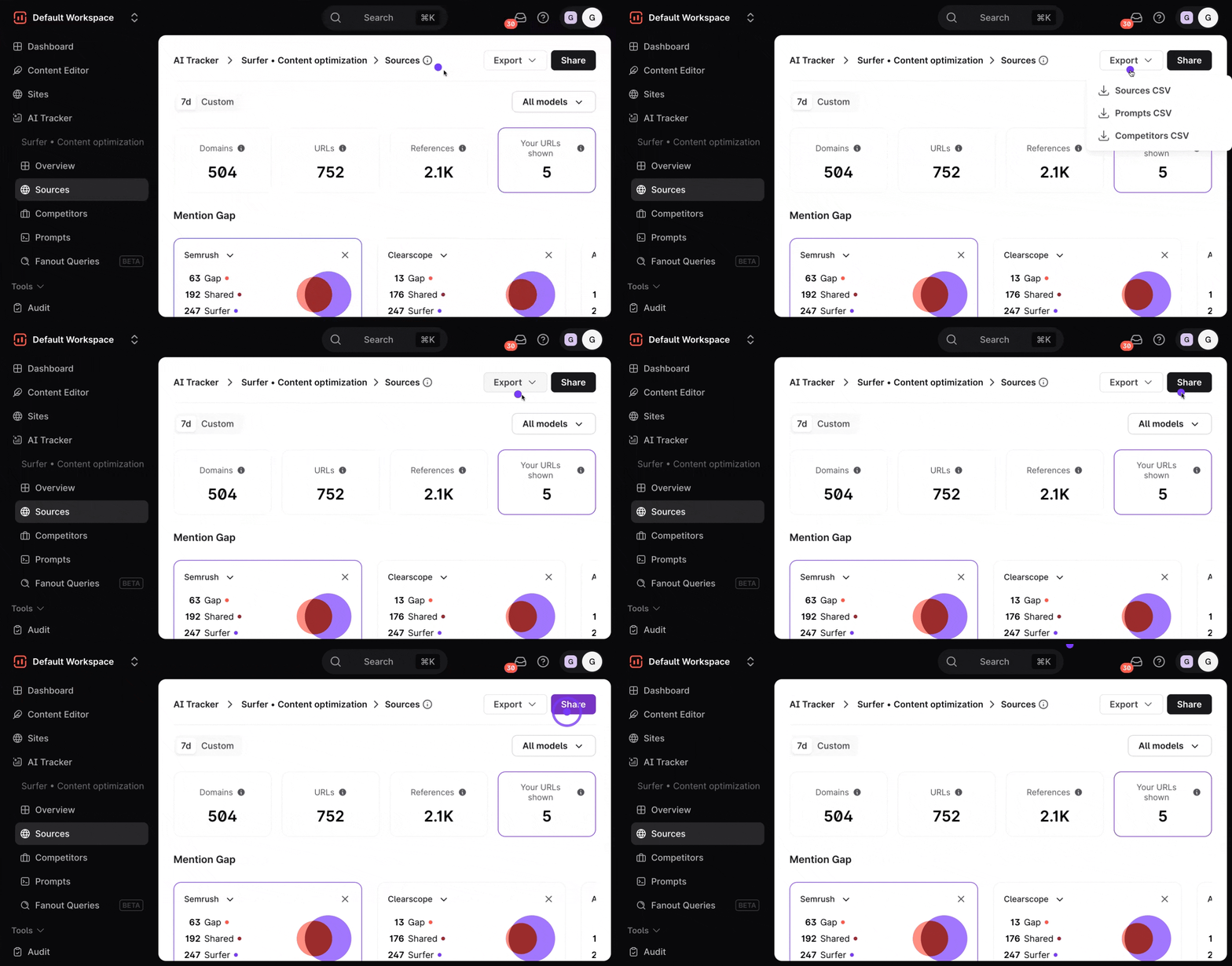
You can download the analysis as a .CSV format by clicking the Export button found in the top right corner of the dashboard.
You can also share view-only access to your AI Tracker report. Perfect for sharing wins with your team or clients to keep them updated on your visibility progress.
Trying to locate a specific URL or domain? Just head over to the Search tab in the dashboard. It's the fastest way to find a source you're tracking or curious about.
Whether you're checking if a certain page is being cited or looking for mentions of a domain, the search functionality saves time and effort from scrolling down across multiple URLs.
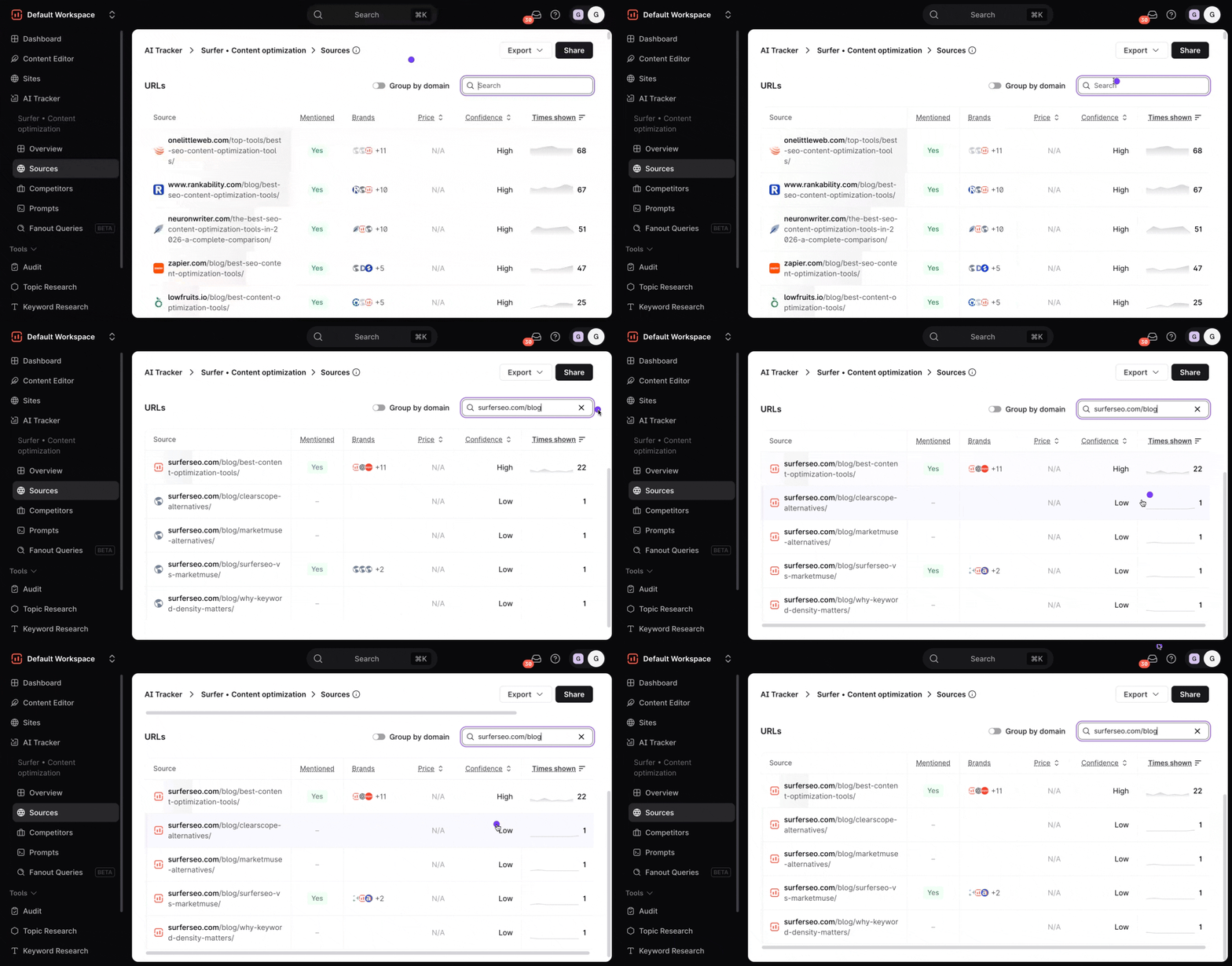
You can create Content Editors directly from the listed sources that are a part of a tracked domain. This way, you can smoothly switch from checking out specific source rates to optimizing its content.
And it’s very simple:
1. Navigate to the Sources section on the left menu bar.
2. Filter out the Sources tab with your domain name.
3. Select a page for optimization based on, for example, how many times it got mentioned by LLMs.
4. Select Optimize, confirm the main keyword you’d like to rank for, and give Surfer a minute to generate the editor for you. Voila!